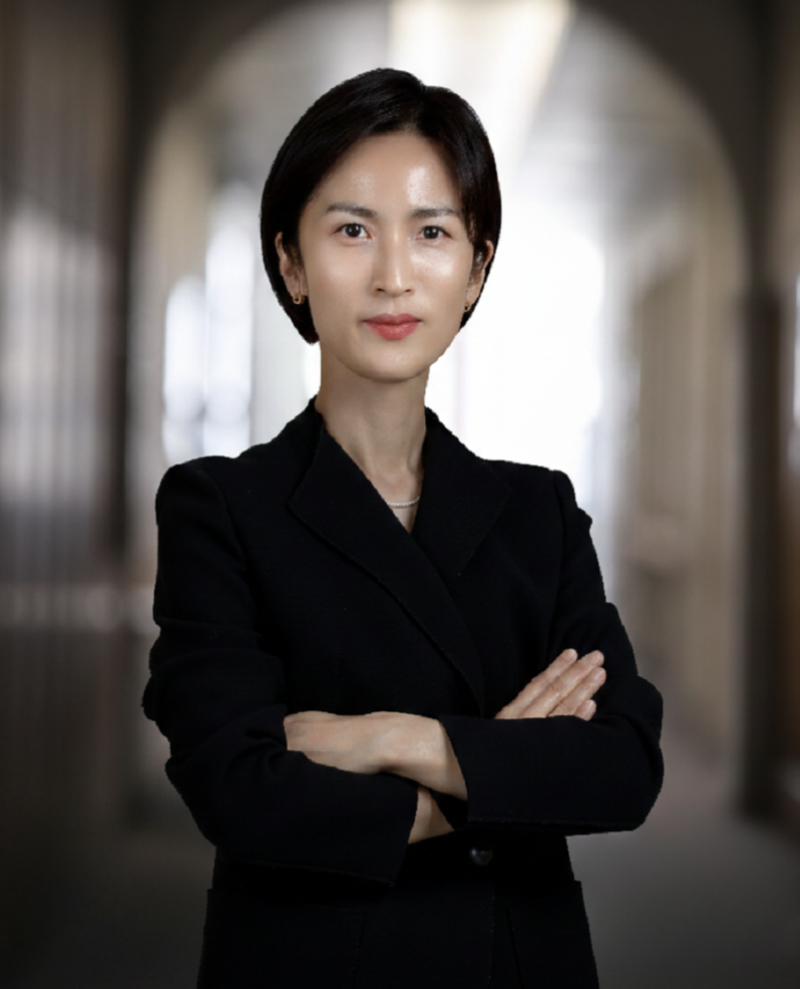
Greetings. I am Lee, Soojin from the College of Global Business at Korea University, and I have been appointed as the 17th Editor-in-Chief of the “Korean Journal of Business Ethics”.
Thanks to the dedicated efforts of previous Editors-in-Chief, editorial board members, and all our members, the “Korean Journal of Business Ethics” has firmly established its status as a journal listed by the National Research Foundation of Korea and has cemented its position as a leading academic journal in the field of ethical management. Building upon these achievements, the 17th Editorial Board aims to ensure the journal’s continuity whilst exploring new roles that respond to the evolving research landscape.
Today, ethical management has expanded beyond mere compliance with norms or declarations of values to encompass the challenges of decision-making amidst uncertainty and ambiguity. The institutionalisation of ESG management, the strengthening of stakeholder accountability, the tension between performance-based evaluation and ethics, and the proliferation of AI and data-driven decision-making are making the criteria for ethical judgement and the allocation of responsibility increasingly complex. In this environment, research on ethical management is required to move beyond the question of ‘what is right’ and engage in academic inquiry into how organisations and individuals perceive, judge and evaluate ethically ambiguous situations. Based on this awareness, the 17th Editorial Board intends to steer the journal in the following directions:
Firstly, we aim to establish the journal as a platform that addresses the issues of ethical judgement and accountability in depth.
Ethical management is no longer a topic confined to specific domains; it is deeply involved in decision-making processes across the entire spectrum of business, including human resources and organisation, strategy, accounting, finance, marketing, technology and innovation. The “Korean Journal of Business Ethics” aims to be a journal that goes beyond norm-centred discussions to broadly embrace theoretical and empirical research addressing ethical dilemmas, evaluation and rewards, attribution of responsibility, and ethical decision-making mechanisms.
Secondly, we aim to be a journal closely connected to the changing realities of organisations.
Ethical management cannot be separated from the conflicts and choices that arise in real-world organisational settings. Accordingly, we will facilitate not only theoretical research but also case studies, policy and institutional analysis, and exploration of new management environments (such as AI, digital transformation and ESG regulations), thereby establishing a practical forum for academic discourse that bridges academia and practice.
Thirdly, we will strive to become a trusted journal that supports the growth of researchers.
Fair and transparent peer review, coupled with a swift yet responsible editorial process, determines the trustworthiness of a journal. The 17th Editorial Board aims to establish a constructive peer review culture that goes beyond mere selection and evaluation, enhancing the quality of research and expanding the scope of new research questions. Through this, we will strive to make the “Korean Journal of Business Ethics” a journal that researchers ‘want to submit to’ and a journal with which they can ‘grow together’.
Based on this vision, the 17th Editorial Board will do its utmost not only to firmly maintain the journal’s status as an indexed publication but also to ensure that “Korean Journal of Business Ethics” evolves into a leading journal that proactively addresses the key issues in contemporary ethical management research. We ask for the continued interest and active participation of all our members.
Thank you.